
RANGE NOTES / BUYER GUIDE
How many styles does your underwear range need?
Start with the choices the wearer needs, not the largest possible style count. A useful range gives every shape a role and makes the quantity behind each variant visible.
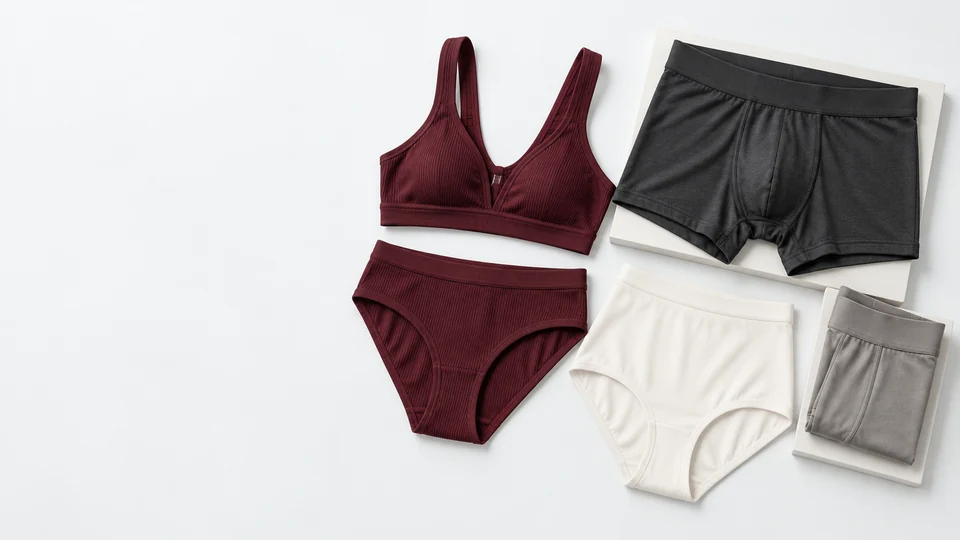
1. Give the core style a clear job.
Write one sentence that describes the intended wearer, coverage and retail role. For a women’s range, an everyday mid-rise brief might be the core; a higher-coverage option or thong then adds a different choice. For men, rise and leg length can distinguish a brief, trunk and boxer brief.
This exercise helps you decide whether a proposed extra style adds a real option or simply repeats the existing one. It also gives development teams a reason for the shape and the fit comments they will receive.
2. Identify what should remain common.
Choose the elements that connect the range: a material feel, colour family, waistband identity or label treatment. Record the details that must match. A common appearance should not hide a necessary material or construction difference.
Keep a separate specification for each style. A shared fabric does not eliminate differences in stretch, seam placement, gusset shape or strap and underband requirements.
3. Review the actual size and colour combinations.
A simple working matrix is enough for the first discussion. It should show what is decided and where the buyer still needs guidance. Do not treat a total piece count as the same thing as a defined production assortment.
| Question | Why it matters |
|---|---|
| Which colours belong in each style? | Avoids assuming every shade runs across the whole range |
| How is quantity split by size? | Shows the real garment demand behind a total |
| What forms a retail pack? | Connects garment allocation with the selling unit |
| Which reference is approved? | Keeps development changes traceable |
4. Move to sampling with specific questions.
Decide whether the next sample is intended to confirm shape, material, branded elastic or the complete retail presentation. Identify the reference and the version, then separate fit changes from artwork and packaging changes.
DALI can begin with an early assortment plan. Send the wearer, market, product references and estimated quantities, together with the decisions still open. The development discussion then has a defined starting point rather than a generic request for a catalogue.